Showing posts with label wildlife. Show all posts

Thursday, June 19, 2014

21 Things You Didn't Know About Giraffes

The longest day of the year is June 21*, and is now dedicated to the longest-necked animal in the world!

June 21 is World Giraffe Day. And as such, we want to do our part by spreading knowledge and awareness of this amazing animal, and ways you can get involved too! Because we believe that action always starts with awareness!

Here are 21 facts you may not know about giraffes:
  1. For a long time, people called the giraffe a camel-leopard, believing it was a combination of a camel and a leopard! That's where the giraffe's species name camelopardalis comes from! 
  2. There are 9 giraffe subspecies: Angolan, Kordofan, Nubian, South African or Cape, West African or Nigerian, Reticulated or Somali, Rothschild, Thornicroft, and Masai.
  3. Giraffe coat colors vary from light tan to practically black. The differences occur due to what the giraffes eat and where they live. Each individual giraffe’s markings are as individual as our fingerprints!
  4. Giraffes are not dependent on drinking water, they stay hydrated through condensation and food.
  5. 200 endangered West African Giraffe exist today in 2008 was listed on the IUCN RED List as ‘endangered’.
  6. Giraffes only need 5 to 30 minutes of sleep in a 24-hour period! They often achieve that in quick naps that may last only a minute or two at a time.
  7. The closest relative to the giraffe is the okapi, which has a much shorter neck relative to body size.
  8. It has been estimated that fewer than 5,000 Reticulated giraffes remain in the wild, from an estimated 28,000 as recently as the late 1990s! The Reticulated giraffe is one of the more common captive giraffe with approximately 450 kept in zoos across the world.
  9. Giraffes can live to be 25 years old, and even older in captivity!
  10. Once mature, the defensive kick of an adult giraffe is enough to seriously damage even the most determined predator, even lions have succumbed to the fierceness of the giraffe's soup bowl size hooves. 
  11. The average gestation period for giraffe is approximately 15 months (453-464 days)!
  12. Giraffes give birth standing up, requiring the newborn to fall 6.5 feet (2 meters) to the ground! A newborn can stand up and run within an hour of being born!
  13. A giraffe's tongue is 18-21 inches long!
  14. Even with its long neck, the giraffe has the same number of vertebrae in its neck as humans do, which is 7.
  15. A giraffe's head is 2m (7ft) away from it's heart, which makes for a very difficult challenge to pump blood to the brain! They have a relatively small heart yet extremely high blood pressure (twice what's found in humans), and a heart beat up to 170 times per minute (again, twice found in humans)!
  16. The patches on a giraffe's body, not only act as camouflage, but also as a thermal window releasing heat from the body.
  17. Giraffes' have legs about 6 feet long, allowing them to run 35mph for short distances!
  18. Giraffes may eat up to 75 pounds (34 kilograms) of food per day. They spend most of their day eating, because they get just a few leaves in each bite.
  19. Giraffe's favorite food, acacia trees, have long thorns that deter most animals — but not giraffes. Their 18-inch (46-centimeter) tongues can reach around the thorns, and their thick, sticky saliva coats any thorns they might swallow.
  20. There are fewer than 1,500 Thornicroft giraffes in the wild, and none in captivity. 
  21. There are almost no Nubian giraffes in captivity, and fewer than 250 in the wild. 

How you can get involved in honor of World Giraffe Day:
  • Share what you know to inspire others to get involved in the plight of the giraffe by sharing this blog post on social media using the links at the bottom of this post!
  • Attend an event in your area. Zoos and parks like Fossil Rim Wildlife Center and North Carolina Zoo are holding fun, interactive and educational activities on the day!
  • Donate to organizations like Giraffe Conservation Foundation, WWF, Defenders of Wildlife and African Wildlife Foundation. 
  • Symbolically adopt a giraffe. Your adoption will help protect giraffes and their habitat.
  • Visit a zoo. Did you know zoos play an integral role in wildlife conservation, education and research!


Which fact were you most astonished by? Share your thoughts in the comment box below! We want to hear!

-the team at Little Critterz


*The longest day of the year is on or around June 21 in the Northern Hemisphere. 


Wednesday, February 12, 2014

Animal Profile: Sun Bear

This week we are showcasing arguably one of the most photogenic animals around: the Sun Bear! Known for being a solitary species we thought it would be a great idea the characteristics of this beautifully goofy creature.

Size: Weighs between 60 and 150 pounds and is 4 to 5 feet in length
Diet: Bees and honey are staples, and also feed on a variety of fruit and insects
Location: Found in tropical rain forests in Southeast Asia
Protection Status: Vulnerable
Interesting Facts:
  • Standing only about 4-5 feet, the Sun Bear is the smallest known species of bear, which suite their arboreal lifestyle easily moving about the trees
  • Known as the "Honey Bear" for its love of honey, it uses its extremely long tongue to obtain honey from beehives
  • They use their long claws to climb trees in order to build nests for sleeping and sunbathing 


Our goal at Little Critterz is to spread the respect of the animal kingdom through education of and interaction with animals. We believe this is to be done by learning about the wondrous world of animals both online and in person at zoos, national parks and aquariums. We also believe respect and protection for animals stems from the admiration of these beautiful, amazing creatures through real and treasured symbols like this Sun Bear miniature porcelain figurine. 

Wednesday, February 5, 2014

Animal Profile: Tufted Puffin

In our fourth week of the Animal of the Week series we drift away from ground-creatures and honor one our favorite airborne friends in the Tufted Puffin. Primarily known for its elegant yellow tufts that run down from each side of its head, the Tufted Puffin is one of the most distinct critters roaming the sky throughout the world.

Size: 15 inches in length and weigh 1.5 pounds
Diet: Primarily consists of fish while rarely eating squid and other invertebrates
Location: Throughout the Pacific Rim, from Alaska to Japan to Canada and California
Protection Status: Least Concern
Interesting Facts:
  • An adult Tufted Puffin can hold up to 20 fish arranged head to tail in its bill at a time!
  • The puffin's heavy bones allow it to dive up to 300 feet in order to catch its prey.
  • The puffins vibrant colors appear during the spring breeding season, however during the winter their bright red beak and yellow plumes turn grey.


Our goal at Little Critterz is to spread the respect of the animal kingdom through education of and interaction with animals. We believe this is to be done by learning about the wondrous world of animals both online and in person at zoos, national parks and aquariums. We also believe respect and protection for animals stems from the admiration of them through real and treasured symbols like this Tufted Puffin miniature porcelain figurine. 

Friday, January 24, 2014

Animal Profile: North American River Otter

For our third installment of the Animal of the Week we are showcasing the North American River Otter. This semi-aquatic mammal is known for its playful disposition and is just as lively under water as it is on land.

Size: Weighs between 10 and 30 pounds and is 25 to 40 inches in length
Diet: Mostly eat fish, but are known to heat various amphibians, crayfish and turtles
Location: Found throughout North America. Abundant in Alaska and along coastal regions in Canada down to the Gulf of Mexico.
Protection Status: Least Concern
Interesting Facts:

  • Can be submerged underwater for up to eight minutes.
  • The otters can survive in all kinds of fresh and salter water habitats, including rivers, lake, swamps and coastal shorelines.
  • Female otters are known to play with their young in order to impart survival and hunting skills


Our goal at Little Critterz is to spread the respect of the animal kingdom through education of and interaction with animals. We believe this is to be done by learning about the wondrous world of animals both online and in person at zoos, national parks and aquariums. We also believe respect and protection for animals stems from the admiration of them through real and treasured symbols like this Otter miniature porcelain figurine. 

Friday, January 10, 2014

Animal Profile: Amur Leopard

To kick off the new year Little Critterz is celebrating the diversity of our wonderful planet by spotlighting a different animal every week! So to start off 2014, we begin with the majestic Amur Leopard of northeastern Asia.


Found in the Primorye region of Russia, the Amur Leopard is the only leopard subspecies that has adapted to a frigid, snowy climate. Like many big cats, the Amur Leopard is an exemplary example of an animal built for hunting. This ferocious feline is known to run at speeds up to 40 miles per hour and can jump ten feet in the air in an effort to capture its prey!


These leopards are characterized as an extremely solitary creature and are known to be very protective of their chosen territory. It is not uncommon for a single Amur Leopard to have a territory of over 100 square miles! Unfortunately though, in the past couple decades, these leopards have lost an estimated 80% of their native territories through harmful activities such as logging and land conservation for farming.


Currently, there are only around 30 Amur Leopards left in the wild. Recently, habitat assessment and anti-poaching measures have been put in place by the Russian Government to help preserve this beautiful animal. While the current situation seems bleak, the recent preservation focus on the Amur Leopard provides new found optimism for the future of this species!


Our goal at Little Critterz is to spread the respect of animals through education of and interaction with animals. We believe this to be done by learning about the wondrous world of animals both online and in person at zoos, national parks and aquariums. We also believe respect, thus protection for animals, stems through admiration of animal, real and treasured symbols, like this Amur Leopard miniature porcelain figurine.

Wednesday, January 8, 2014

7 Perfectly Suited Winter Animals

As temperatures keep dropping and clothing layers pile up, it's remarkable to think about how animals can live in frozen tundras with just fat and fur.

These animals, ranging from one of the largest land mammals on Earth to flightless birds, these fascinating creatures are perfectly suited for harsh winter environments.

Polar Bear
One of the largest land mammals on Earth, polar bears are located in Northern Canada, Alaska, Russia and Norway. They are able to live in these extreme temperatures partly because their coat and skin are adapted to retain heat and sunlight.


Get a commemorative polar bear here.


Arctic Fox
Native to the Arctic region, the fox's small body, dense fur, and furry paws are adaptations that are beneficial to these cold temperatures. The arctic fox can even wrap it's large bushy tail around itself for warmth.


Fascinated by this fox? Purchase a figurine here.


Snowy Owl
The Snowy Owl is the largest owl in the arctic and has a wingspan of about 5 feet. A carnivore, this owl is a patient hunter with excellent eye sight. Unlike most owl that are nocturnal, the Snowy Owl is diurnal, meaning it hunts during both the night and day.


Get 'Ghost', the Snowy Owl porcelain figurine here.


Caribou
Caribou, or reindeer, are well adapted to live in the tundras because of their thick skin and fur. In the winter, the are able to use their hooves to dig through snow to forage for moss and other food.


Every house hold needs a caribou statue. How about this one?


Penguin
Penguins are aquatic, flightless birds, highly adapted to water. In fact they spend nearly 75% of their life in the water hunting food. Their unmistakable tuxedo is a form of camouflage for protection. From above their back looks black and blends into the dark waters, from below their underside matches the lighter sky.


Want a porcelain token of this fun and stylish social bird, how about this penguin chick or penguin on skis?


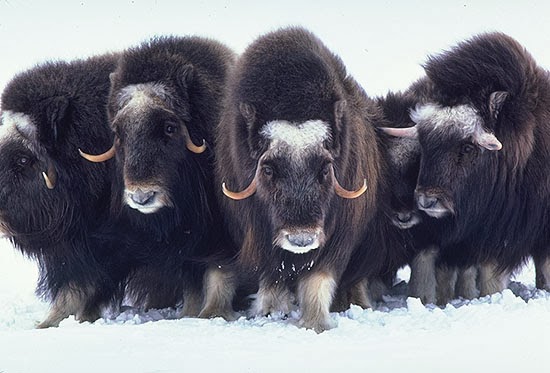
Musk Ox
Musk Oxen will reach lengths of about 7 feet, can carry 400-900 pounds and have 2 coat layers; the outer of hair, the inner of wool. This adaptation is what helps the musk ox survive during extreme cold temperatures.

These furry, powerful beings were meant to be admired. Add a musk ox figurine to your collection.


Snowshoe Hare
Not only can the snowshoe hare change its fur color to hide from predators, they also have much larger hind legs than typical hares to act as a sort of snowshoe, allowing them to walk on snow. This is what gave them their common name.

These adorable, sprightly hares in porcelain form are a perfect winter accoutrement for your home.

Animals, after-all are quite admirable!

Happy Wednesday!
-Little Critterz

Friday, January 3, 2014

2013 National History Museum's Wildlife Photographer of the Year

As the year has come to an end, lets take some time to honor the man who has been designated 2013's Grand Title wildlife photographer of the year by the National History Museum. Greg du Toit, a native of South Africa, has made his mark in the photography world with his vibrant pictures of the many creatures that call the variety of ecosystems in Africa home. Greg's winning photograph is called the "Essence of Elephants" was taken in the Northern Tuli Game Reserve in Botswana.

    Essence of Elephants

Check out some more of Greg's amazing photographs!


Here are some of the other award winners.


Isak Pretorius, Winner: Birds


Luis Javier Sandoval, Winner: Cold Blooded Animals


Joe McDonald, Winner: Mammals


Jasper Doest, Winner: Creative Visions


Udayan Rao Pawar, Young Wildlife Photographer of the Year

Friday, December 20, 2013

Wildlife Photographer Determined to Photograph Endangered Species and Environments

Photographer Joel Sartore is a 20-year contributor to National Geographic magazine. His assignments have taken him to every continent to document the world's most beautiful and challenging environments. He is on a mission to document endangered species and landscapes, before they disappear, in order to show a world worth saving.

His book RARE: Portraits of America's Endangered Species features portraits of some of the country's most endangered species. "Some of them are likely to go extinct without people ever knowing they existed. Rare shows what we stand to lose if we don’t act now. The good news is that there is still time, and this book highlights what each of us can do to save these unique creatures —and ultimately ourselves."


A bog turtle at Zoo Atlanta.

Woodland Caribou. Less than 40 live in the United States since they rely on old-growth forest habitats.

An ocelot from the San Diego Zoo.

A polar bear from the Tulsa Zoo.

A California condor at the Phoenix Zoo.

A grey wolf at the New York State Zoo in Watertown, NY.


In addition to the work he has done for National Geographic, Joel has contributed to Audubon Magazine, Geo, Time, Life, Newsweek, Sports Illustrated and numerous book projects.

You can purchase his books and fine art prints here.