Showing posts with label nature. Show all posts

Tuesday, September 17, 2013

Rewild The World

TED Talks are one of my favorite places to learn about new exciting topics and developments in Technology, Entertainment, Design (or TED), Business, Science and Global Issues. I constantly find myself inspired by these remarkable speakers and the ideas, problems and solutions they present.


Recently TED posted a talk by George Monbiot from a global talk this past July entitled "For More Wonder, Rewild the World". Here is the talk:

http://www.ted.com/talks/george_monbiot_for_more_wonder_rewild_the_world.html

Interesting quotes from the talk:
"And it was only when I stumbled across an unfamiliar word that I began to understand what I was looking for.

"So the wolves, small in number, transformed not just the ecosystem of the Yellowstone National Park, this huge area of land, but also its physical geography."

"Why shouldn't all of us have a Serengeti on our doorsteps?"

Rewilding is the mass restoration of ecosystems. Or a second definition, rewilding of human life not in opposition to civilization but have access to richer, wilder lives of adventure because of rewilded habitats. I'm picturing a less lonely and non post-apocalyptic version of "I Am Legend". Doesn't that sound like a utopia? Is a Serengeti on our doorsteps really that farfetched?

Temperatures, climates and environments similar to now in the West hosted a variety of fauna and megafauna not seen here today. Elephants, rhinoceros and lions grazing the streets of Britain. Climate hasn't chased away these animals but pressure from humans has. Now in keeping with wolves and whales example, perhaps he's suggesting reintroducing megafauna to Western society trinkle down effect may include human population decrease thus resulting in more smaller fauna and flora increases, which in turn increases megafauna populations.

Okay, so I don't exactly see a wildlife park in the middle of the American suburbs, at least in my lifetime. But it sure if fun to think about. And I do agree with his parting words, "In motivating people to love and defend the natural world, an ounce of hope is worth a ton of despair." 

Wednesday, September 4, 2013

Ways to Celebrate // Happy Wildlife Day!

Today is National Wildlife Day. Most people shrug off days like today, or Earth Day or Dog Day, etc. But isn't it symbolic, like a birthday, a day to appreciate and celebrate a particular being? Let's celebrate! In this case it's not Timmy down the street, but all wildlife on this earth.

Wildlife includes all animals, plants, fungi, and organisms that are non-domesticated by humans, although it is agreed by most scientists that all wildlife is affected by human species (no surprise there, right?)

Every species is an important of it's ecosystem, and thus the ecosystem of the planet and consequently humans. Jonas Salk once said that if all humans disappeared from the Earth all life would flourish in 50 years, but if insects disappeared all life would end.

That's a very surprising, and humanizing concept (no pun intended). Humans have a unique ability to create and destroy on a massive scale, and like most people, we here at Little Critterz believe in minimizing destruction and conserving the planet for all life on it now, and for generations to come.

So hats off to all the wildlife on Earth. We are entertained and mesmerized by you. We learn from you. We appreciate you. So let's donate to an organization today whose commitment to wildlife preserves the species. Visit your local zoo or aquarium because their efforts are crucial to the survival, education, and research to wildlife. Watch a wildlife documentary to learn about a new species or environment. Or make a purchase on Little Critterz so we can continue to support non-profit wildlife organizations. Whatever you do today, Happy Wildlife Day!

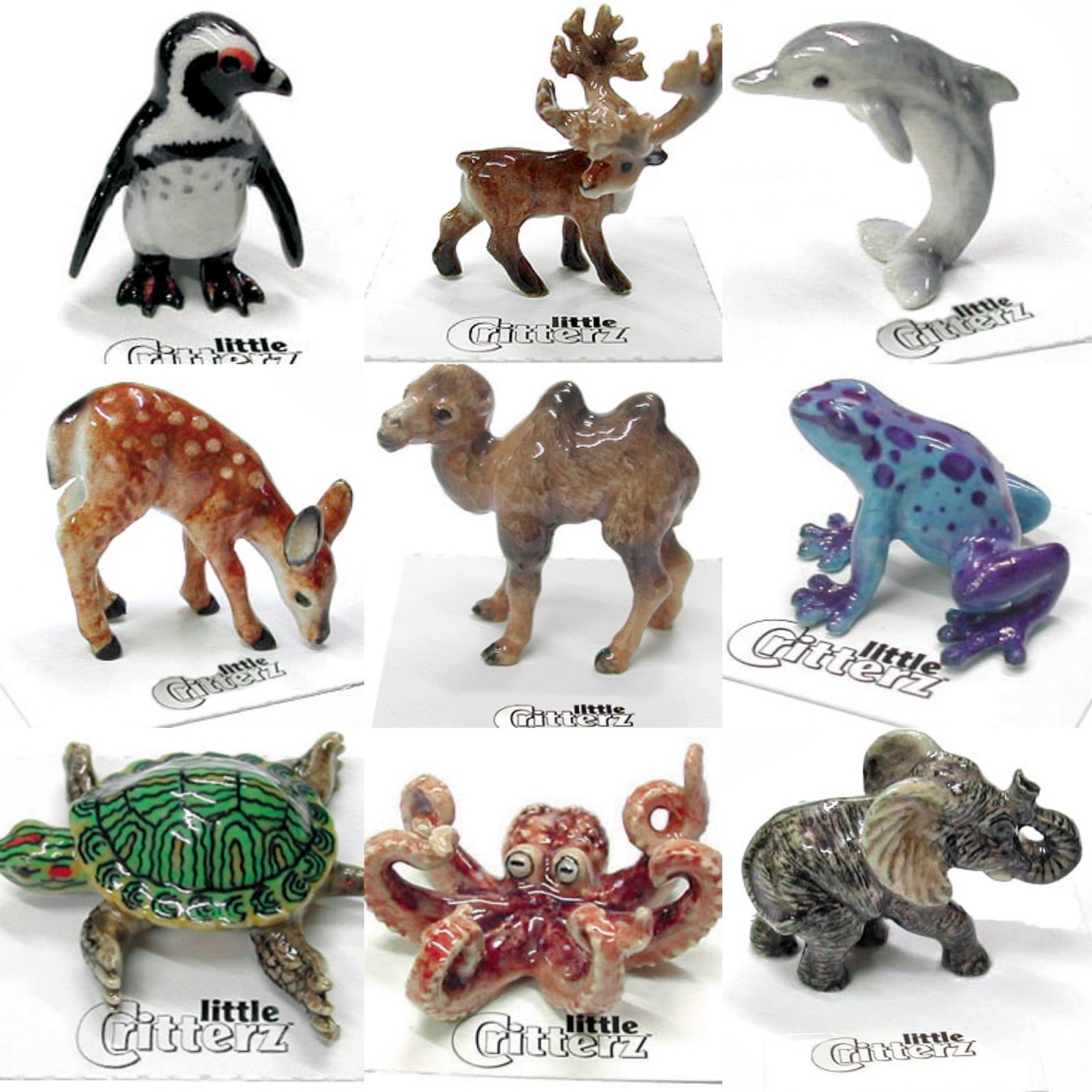
Some of our favorite wildlife species. What's yours?


Wednesday, August 14, 2013

12 Coolest Caves

Reed Flute Cave - Guilin, China 

Located in the Guangxi region of southern China, the Reed Flute Cave is a natural limestone cave over 180 million years old and known for its multicolored lighting. It has over 70 inscriptions in the cave, some dating back to 792AD.


Luray Caverns - Virginia

Discovered in 1878, the Luray Caverns is the largest cave in the eastern US where visitors can see bizzare formations like the "Throne Room", "Giant's Hall" and "Fried Eggs".


Green Grotto Caves - Jamaica

A large labyrinth limestone cave located near Discovery Bay, is named for the green algae covering its walls. The caves are historical rich from the first Jamaicans, to the takeover of the English, to the two world wars.


Carlsbad Caverns - New Mexico

Below the rugged ground of rocky slopes, shrubbery and cactus lies 118 caves in the Carlsbad Caverns. The caverns host the Big Room which is the third largest chamber in North America and the seventh in the world.


The Baths - Virgin Islands

Giant boulders brought to surface by volcanic eruption are scattered about forming tranquil pools, tunnels, arches and beautiful grottos.


Ruby Falls - Tennessee

Ruby Falls located within Lookout Mountain, is Americas highest underground waterfall at over 1120 feet below the surface.


Eisriesenwelt Ice Caves - Austria

Eisriesenwelt is the German word for World of the Ice Giants. The cave is inside Hochkogel Mountain of the Alps and is the largest ice cave in the world.


Blue Grotto - Capri, Italy

The Blue Grotto is a sea cave located in southern Italy where the sunlight passes through underwater cavities and causes a rich blue reflection upon the water, illuminating the cavern. A tiny entrance allows passenger to come through in small groups by tiny boats. This blue grotto is one of several, another is located just off the coast of Split, Croatia.


Lascaux Caves - France

We've all heard about the Lascaux Caves in southwestern France as the setting of Paleolithic cave paintings. Discovered by a couple of young boys, the cave paintings are estimated to be 17,300 years old. Fungus and black mold have begun to cover the art due to human introduced moisture since the 1990s, they may not be around much longer.


Cave of Crystals - Chihuahua Mexico

Connected to the Naica Mine, the main chamber contains giant selenite crystals, some of the largest found in the world. The cave is extremely hot, reaching temperatures of 138F, so proper protection is recommended.


Waitomo Glowworm Caves - New Zealand

The glowworm species, Arachnocampa, is found exclusively on New Zealand and is responsible for the illumination of the cave.


Cave of the Swallows - Mexico

The Cave of the Swallows is an open air pit cave with a 1214 free fall drop, making it the largest shaft cave in the world. A skyscrapper can easily fit inside of it.

Sunday, August 4, 2013

14 Unusual Facts About Hummingbirds

Here at Little Critterz, we are fascinated by hummingbirds. I bet that everyone knows they can fly incredibly fast, and they are so often found in our gardens I enjoy having a humming bird feeder. But did you know this about these birds?


  1. The average lifespan of a hummingbird is about 4 years. In one instance, a female hummingbird lived over 12 years. 
  2. Common hummingbirds wing beats 50-200 times per second, on average.
  3. It's a common misconception that the sugar-water in the feeder should be red. It shouldn't. Do not put any dye into the mixture. The red and yellow coloring on the feeder itself is what attracts the hummingbird.
  4. Hummingbirds are able to hover by flapping their wings in a figure-8 pattern.
  5. They are an endangered species.
  6.  Hummingbirds are only found in the Western Hemisphere.
  7. Habitat loss and climate change are the biggest threats to hummingbirds.
  8. They are the smallest bird in the world.
  9. They can flash or hide their colors when they want. 
  10. A hummingbird's brain is 4.2% of it's body weight, the largest in the bird kingdom.
  11. They can hear better and see farther than humans.
  12. Hummingbirds do not use their beaks to drink nectar like a straw, they lap up the liquid using their tongue.
  13. They can weigh between 2-20 grams. A penny weighs 2.5 grams.
  14. They can dive at speeds up to 60 miles per hour.


Sources

Tuesday, July 16, 2013

Get Clean Air With No Work

Humans (and animals) need clear air to survive. And while we work with bureaucracies to stop burning coal and polluting the air, we can do something very simple to purify the air in our homes. Are you ready for this?

Houseplants! We know trees give us breathable oxygen by absorbing carbon dioxide and releasing oxygen through its leaves. No need to buy expensive and energy wasting air purifying machines, when all you need is a little green and TLC (tender loving care, that is).

According to NASA, here's a list of plants that best filter the air in your home.

·       English ivy (Hedera helix)
·       Spider plant (Chlorophytum comosum)
·       Golden pothos or Devil's ivy (Scindapsus aures or Epipremnum aureum)
·       Peace lily (Spathiphyllum 'Mauna Loa')
·       Chinese evergreen (Aglaonema modestum)
·       Bamboo palm or reed palm (Chamaedorea sefritzii)
·       Snake plant or mother-in-law's tongue (Sansevieria trifasciata'Laurentii')
·       Heartleaf philodendron (Philodendron oxycardium, syn.Philodendron cordatum)
·       Selloum philodendron (Philodendron bipinnatifidum, syn.Philodendron selloum)
·       Elephant ear philodendron (Philodendron domesticum)
·       Red-edged dracaena (Dracaena marginata)
·       Cornstalk dracaena (Dracaena fragans 'Massangeana')
·       Janet Craig dracaena (Dracaena deremensis 'Janet Craig')
·       Warneck dracaena (Dracaena deremensis 'Warneckii')
·       Weeping fig (Ficus benjamina)
·       Gerbera daisy or Barberton daisy (Gerbera jamesonii)
·       Pot mum or florist's chrysanthemum (Chrysantheium morifolium)

·       Rubber plant (Ficus elastica)

How cool is this? Little Critterz know it's important to have greenery in your home because of the tranquility and peace it brings, but we also love sustainability so these plants win in our book!

Friday, July 12, 2013

Did You Know?: Elephant Edition

I'm sure you've noticed how some elephants look different. Sometimes they are very large, with wide flowing ears and a dominating back, whereas others are slender with small features. No, this can't be chalked up to diet, millions of years of environmental conditions shaping these species into their modern form, yes.

But you're right. Elephants can look very different because African and Asian elephants are very different. In fact, their genetic differences are so great they cannot interbreed. A successful birth has only happened once, and unfortunately Motty died just two weeks after it's birth despite intensive care.

African elephants weight 4,000-7,000 kg (8,800-15,400 lbs) where Asian elephants weight 3,000-6,000 kg (6,600-13,200 lbs). African elephants are generally taller 3-4 meters (10-13 feet), have more wrinkled skin, bigger ears that reach up over the neck, have a concave back and have two fingers on their trunks. Asian elephants are 2-3.5 meters tall (6.5-11 feet), smoother skin, smaller ears and convex back, and females have rudimentary tusks or no tusks at all!


Thursday, June 20, 2013

Our World Without Water

As you've probably seen us post about on our Facebook and Twitter pages, we've been shocked, nervous and curious about food production and waste as of late. We know that climate change is occurring and population is growing. So we wonder, what factors are contributing to the impending food crises? After all, there is estimated to be 9 million people in the world by 2050, and poverty and starvation is already a huge problem.

Water is the Worlds Most Precious Commodity

In Developed Nations, 95% of water that enters the home goes down the drain.

We know long showers, and letting the water run while brushing your teeth and washing your face wastes water after all 27% of water usage is from showering. But did you know that receiving one newspaper every day uses 66,000 gallons of water each year? Holy cow!

70% of water usage is for irrigation. But over half of the water used for irrigation is lost to leaks!

Trends

Increased population
Decreasing productivity due to climate change
Changing consumption

What People Are Eating Is Changing

In 2010, the world consumed 235 million tons of meat. By 2020, it is expected the world will consume an additional 60 million tons.

Producing 1kg of animal protein requires 100 times more water than 1kg of grain protein.

Let's Talk About Waste

24% of calories produced are not consumed. That's 198 million hectares, or the size of Mexico. Think about all of the energy and water that goes into producing this food, only to be thrown away!

In monetary terms, the average US American family wastes $1600 in food every year.

A UK report suggests that food waste if given to pigs instead of incarcerated could provide 800,000 tons of pork per year.

Anyone Else Nervous Yet?

So what can we do?

Grocery shop more often, but buy less. Buy what you need for the next day or two. I think we in the US feel so pressed for time that we make excuses about not having time to run to the store for an item we need. But wouldn't we rather make the time to go more often instead of over buying, over spending, and wasting what we don't really need just because we want to be "safe not sorry"?

Drive less. One car uses 40,000 gallons of water in gasoline. Walk or ride your bike to the grocery store. Making lifestyle choices to be more active everyday will cut down on gym time, leaving more time to be conscious about buying habits and the environment. Can we say win, win!

What are you doing to save water or prevent food waste? Comment below and let us know!