Showing posts with label animals. Show all posts

Wednesday, February 12, 2014

Animal Profile: Sun Bear

This week we are showcasing arguably one of the most photogenic animals around: the Sun Bear! Known for being a solitary species we thought it would be a great idea the characteristics of this beautifully goofy creature.

Size: Weighs between 60 and 150 pounds and is 4 to 5 feet in length
Diet: Bees and honey are staples, and also feed on a variety of fruit and insects
Location: Found in tropical rain forests in Southeast Asia
Protection Status: Vulnerable
Interesting Facts:
  • Standing only about 4-5 feet, the Sun Bear is the smallest known species of bear, which suite their arboreal lifestyle easily moving about the trees
  • Known as the "Honey Bear" for its love of honey, it uses its extremely long tongue to obtain honey from beehives
  • They use their long claws to climb trees in order to build nests for sleeping and sunbathing 


Our goal at Little Critterz is to spread the respect of the animal kingdom through education of and interaction with animals. We believe this is to be done by learning about the wondrous world of animals both online and in person at zoos, national parks and aquariums. We also believe respect and protection for animals stems from the admiration of these beautiful, amazing creatures through real and treasured symbols like this Sun Bear miniature porcelain figurine. 

Wednesday, February 5, 2014

Animal Profile: Tufted Puffin

In our fourth week of the Animal of the Week series we drift away from ground-creatures and honor one our favorite airborne friends in the Tufted Puffin. Primarily known for its elegant yellow tufts that run down from each side of its head, the Tufted Puffin is one of the most distinct critters roaming the sky throughout the world.

Size: 15 inches in length and weigh 1.5 pounds
Diet: Primarily consists of fish while rarely eating squid and other invertebrates
Location: Throughout the Pacific Rim, from Alaska to Japan to Canada and California
Protection Status: Least Concern
Interesting Facts:
  • An adult Tufted Puffin can hold up to 20 fish arranged head to tail in its bill at a time!
  • The puffin's heavy bones allow it to dive up to 300 feet in order to catch its prey.
  • The puffins vibrant colors appear during the spring breeding season, however during the winter their bright red beak and yellow plumes turn grey.


Our goal at Little Critterz is to spread the respect of the animal kingdom through education of and interaction with animals. We believe this is to be done by learning about the wondrous world of animals both online and in person at zoos, national parks and aquariums. We also believe respect and protection for animals stems from the admiration of them through real and treasured symbols like this Tufted Puffin miniature porcelain figurine. 

Friday, January 24, 2014

Animal Profile: North American River Otter

For our third installment of the Animal of the Week we are showcasing the North American River Otter. This semi-aquatic mammal is known for its playful disposition and is just as lively under water as it is on land.

Size: Weighs between 10 and 30 pounds and is 25 to 40 inches in length
Diet: Mostly eat fish, but are known to heat various amphibians, crayfish and turtles
Location: Found throughout North America. Abundant in Alaska and along coastal regions in Canada down to the Gulf of Mexico.
Protection Status: Least Concern
Interesting Facts:

  • Can be submerged underwater for up to eight minutes.
  • The otters can survive in all kinds of fresh and salter water habitats, including rivers, lake, swamps and coastal shorelines.
  • Female otters are known to play with their young in order to impart survival and hunting skills


Our goal at Little Critterz is to spread the respect of the animal kingdom through education of and interaction with animals. We believe this is to be done by learning about the wondrous world of animals both online and in person at zoos, national parks and aquariums. We also believe respect and protection for animals stems from the admiration of them through real and treasured symbols like this Otter miniature porcelain figurine

Wednesday, January 15, 2014

Animal Profile: Golden Lion Tamarin

Our Animal of the Week this week is the Golden Lion Tamarin. This vibrant South American critter is a perfect mixture between a monkey and a small rodent and stands out in the lush rain forest with its beautiful golden mane.

Size: Weighs an average of 1.5 pounds and average length is 10.3 inches long.
Diet: Omnivorous diet consisting mostly of fruit, lizards, insects and bird's eggs.
Location: Southeastern Brazil
Protection Status: Endangered, there are only an estimated 400 Golden Lion Tamarins left in the wild.
Interesting Facts:
  • Golden Lion Tamarin newborns are generally twins
  • They sleep in different sleeping dens every night (usually tree-hollows) in order to evade predators
  • The Tamarins have a special alarm call for birds flying overhead that alerts other members of the group to seek cover in the dense forest 


Our goal at Little Critterz is to spread the respect of the animal kingdom through education of and interaction with animals. We believe this is to be done by learning about the wondrous world of animals both online and in person at zoos, national parks and aquariums. We also believe respect and protection for animals stems from the admiration of them through real and treasured symbols like this Golden Lion Tamarin miniature porcelain figurine

Friday, January 10, 2014

Animal Profile: Amur Leopard

To kick off the new year Little Critterz is celebrating the diversity of our wonderful planet by spotlighting a different animal every week! So to start off 2014, we begin with the majestic Amur Leopard of northeastern Asia.


Found in the Primorye region of Russia, the Amur Leopard is the only leopard subspecies that has adapted to a frigid, snowy climate. Like many big cats, the Amur Leopard is an exemplary example of an animal built for hunting. This ferocious feline is known to run at speeds up to 40 miles per hour and can jump ten feet in the air in an effort to capture its prey!


These leopards are characterized as an extremely solitary creature and are known to be very protective of their chosen territory. It is not uncommon for a single Amur Leopard to have a territory of over 100 square miles! Unfortunately though, in the past couple decades, these leopards have lost an estimated 80% of their native territories through harmful activities such as logging and land conservation for farming.


Currently, there are only around 30 Amur Leopards left in the wild. Recently, habitat assessment and anti-poaching measures have been put in place by the Russian Government to help preserve this beautiful animal. While the current situation seems bleak, the recent preservation focus on the Amur Leopard provides new found optimism for the future of this species!


Our goal at Little Critterz is to spread the respect of animals through education of and interaction with animals. We believe this to be done by learning about the wondrous world of animals both online and in person at zoos, national parks and aquariums. We also believe respect, thus protection for animals, stems through admiration of animal, real and treasured symbols, like this Amur Leopard miniature porcelain figurine.

Wednesday, January 8, 2014

7 Perfectly Suited Winter Animals

As temperatures keep dropping and clothing layers pile up, it's remarkable to think about how animals can live in frozen tundras with just fat and fur.

These animals, ranging from one of the largest land mammals on Earth to flightless birds, these fascinating creatures are perfectly suited for harsh winter environments.

Polar Bear
One of the largest land mammals on Earth, polar bears are located in Northern Canada, Alaska, Russia and Norway. They are able to live in these extreme temperatures partly because their coat and skin are adapted to retain heat and sunlight.


Get a commemorative polar bear here.


Arctic Fox
Native to the Arctic region, the fox's small body, dense fur, and furry paws are adaptations that are beneficial to these cold temperatures. The arctic fox can even wrap it's large bushy tail around itself for warmth.


Fascinated by this fox? Purchase a figurine here.


Snowy Owl
The Snowy Owl is the largest owl in the arctic and has a wingspan of about 5 feet. A carnivore, this owl is a patient hunter with excellent eye sight. Unlike most owl that are nocturnal, the Snowy Owl is diurnal, meaning it hunts during both the night and day.


Get 'Ghost', the Snowy Owl porcelain figurine here.


Caribou
Caribou, or reindeer, are well adapted to live in the tundras because of their thick skin and fur. In the winter, the are able to use their hooves to dig through snow to forage for moss and other food.


Every house hold needs a caribou statue. How about this one?


Penguin
Penguins are aquatic, flightless birds, highly adapted to water. In fact they spend nearly 75% of their life in the water hunting food. Their unmistakable tuxedo is a form of camouflage for protection. From above their back looks black and blends into the dark waters, from below their underside matches the lighter sky.


Want a porcelain token of this fun and stylish social bird, how about this penguin chick or penguin on skis?


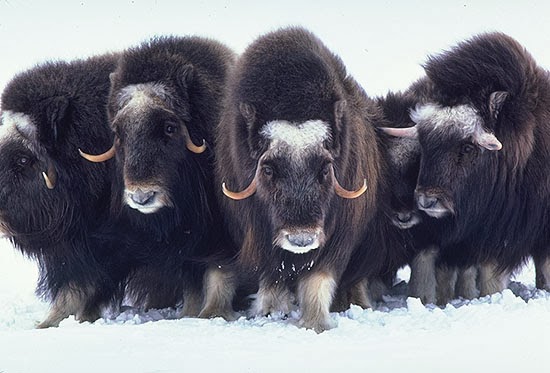
Musk Ox
Musk Oxen will reach lengths of about 7 feet, can carry 400-900 pounds and have 2 coat layers; the outer of hair, the inner of wool. This adaptation is what helps the musk ox survive during extreme cold temperatures.

These furry, powerful beings were meant to be admired. Add a musk ox figurine to your collection.


Snowshoe Hare
Not only can the snowshoe hare change its fur color to hide from predators, they also have much larger hind legs than typical hares to act as a sort of snowshoe, allowing them to walk on snow. This is what gave them their common name.

These adorable, sprightly hares in porcelain form are a perfect winter accoutrement for your home.

Animals, after-all are quite admirable!

Happy Wednesday!
-Little Critterz

Thursday, November 21, 2013

Japanese Grandmother and Her Odd-Eyed Cat

Japanese photographer Miyoko Ihara has been documenting the life of her grandmother, Misao, for 13 years. One day, Ihara's grandmother found an odd-eyed kitten in the shed. She named the cat “Fukumaru” in hope that “God of fuku” (good fortune) comes and everything will be smoothed like a “maru” (circle)”. The two have been inseparable ever since.

“Under the sun, everyday is a good day. Another good day, Fukumaru”, Misao.

“We’ll never be apart!”, says Misao to Fukumaru. Both of them live in a tiny world, with dignity, with mutual love. Still today, under the blue sky, Misao and Fukumaro work in the fields and in these natural surroundings, where they shine like the stars.”


This touching and beautiful photo book captures the everyday life of elderly Misao and her steadfast feline companion, following them as together they work in the fields, admire spring blossoms, or nap in the sun. Both friends are hard of hearing, so it is endearing to witness the strength of their connection, enacted through sight and physical presence.


We think these photos are simple lovely, and touching. What do you think?

You can buy the book here


Wednesday, November 6, 2013

Photographer Captures Wild Animals in Supermarket

Indonesian photographer Agan Harahap has posed a new series, Garden Fresh which presents what animals would look like if browsing aisles in the supermarket. Visual and stunning, these amusing images play with the ironic idea of animals, food availability and the line between humans and wildlife.


"Garden Fresh series investigates the shifting boundaries between humans and animals in today’s environment and the complex relationship between art and nature. It is like a fable about a journey undertaken by the animals when they venture into our daily lives. The animals are confronted by a new reality that is in conflict with their natural habits and habitats.

At the same time, when we see these ‘zoo-trapped’ animals in supermarkets, their most outstanding characteristics are isolated as their ‘only’ characteristics. The animals are stripped of their own identities and are used as empty vessels to be filled with the human drama of parody, satire and allegory. We cannot help but see animals from a human vantage point, and therefore in some sense all the works in the present exhibition are actually about us." - Agan Harahap